NDIS under a Labor government, what can we expect?
Are we looking at positive change and a bright future?
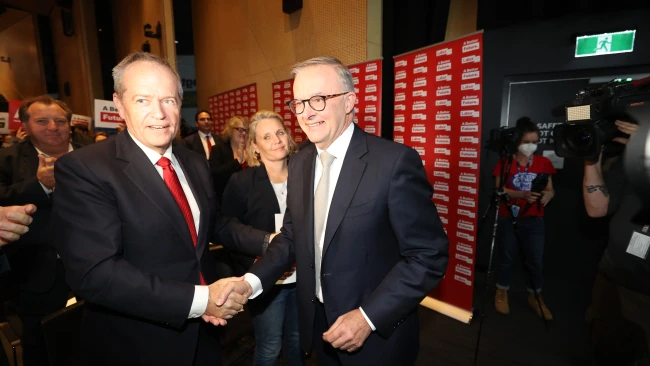
Now the dust has settled, the Labor government is in power, and Mr Bill Shorten champion of the NDIS is our esteemed NDIS minister. Here we ponder the question above - Are we looking at a positive change and a bright future under his guidance? Let's start with a bit of a look at Labor's stance on the NDIS before they got into power.
I think the most important part of Labor campaigning around the NDIS was Mr Shorten's "Hands of the NDIS" campaign. A lot of time was spent hearing the stories of how the NDIS was impacting some people's lives in a terribly negative way. Mr Shorten got amongst it and started to get a feel for the challenges that people were facing, the budget cuts that were happening for no logical reason and, in some cases, the physical and mental suffering that has been caused by some of the planning decisions made around the support that people with disability have been made to endure.
Mr Shorten has rallied against the Liberal government and their treatment of NDIS participants very loudly. He has made a lot of promises and on paper they all look incredibly positive and give a lot of hope. So, it is early days yes, but how are we looking just over a month out from the election? Let's have a bit of a squizz.
The most notable change that has occurred is that the Chief Executive Officer - Martin Hoffman, resigned from his position leaving Lisa Studdert Deputy CEO for Markets, Governments and Engagement in the role as an interim measure. Now, I have no information or evidence that Bill Shorten had anything to do with this decision, okay? I'm just going to say, if I were Martin Hoffman, I would have resigned too. Lunchtimes around that office would have been very awkward.
Mr Shorten has also dedicated himself to "restoring trust" in the NDIS. I like the premise and I can tell you now that my observations is that trust in the NDIS is at an all time low, so anything done to improve on that is going to be a positive. He has outlined a 6-point plan to regain this trust and improve the scheme.
6 NDIS election promises, now mandated
Labor has outlined six strategies it hopes will return the scheme “to its original vision” because being on the NDIS shouldn’t be like “having a second full time job”.
1. Removing the NDIA staff cap While originally designed to have just under 11,000 staff, under the Abbott government the number of staff at the NDIA was restricted to 3,000. While this has been gradually lifted it is still well short of the amount needed, meaning external labour hires are widely used.
2. Fewer lawyers, less waste Labor committed to reducing the use of external lawyers such as those associated with tribunal hearings. They will also seek to cut down on waste through criminal activities and fraud.
3. Better planning Labor will streamline the planning process to ensure plans are more “efficient, fair and investment focused”.
4. Justifying cuts to plans There has been a commitment to stop arbitrary cuts to plans and to introduce an expert review process to sort out disagreements. This should reduce the number of people who are forced to take the government to tribunal.
5. Regional service improvements in regional areas of Australia, there are often insufficient numbers of providers to deliver services to those with plans, leaving some individuals with allocated funds but no ability to use them. Nationally the average proportion of allocated budgets spent sits at about 71%, in East Arnhem this sits at just 38%.
6. Collaboration with people with disability Labor committed to co-designing changes with people with disability. Previously proposed initiatives have been formulated without their input. Labor also promised more people with disability on NDIA’s board. It is likely the new minister will seek to remove the current chief executive officer and to employ more people with disability at senior levels in the agency.
So how does this look on the ground?
From the view of a provider in the NDIS, who's primary business is Support Coordination and Recovery Coaching, we are yet to see any real difference. We are still seeing, and hearing things that make us concerned for the people receiving support. Plans still seem to be getting cut, we have seen people get reassessed for eligibility, (and told they no longer meet access) when they have simply asked for a small plan change, there still seems to be an inability for the NDIS to be able to recognise more than one disability per person and my favourite one we have seen this week, has been the ongoing saga of the NDIS ignoring every three thousand dollar report that is thrown at them and deciding that somebody without the relevant qualifications or knowledge to do so, is a preferred decision maker when it comes to the supports a person should be funded for. Anyone who questions if that is true or not, just ask the NDIS the qualifications of the person who decided that your expert report was not enough evidence, the answer will be "We have the relevant experts to make those decisions" Then why don't they put their names and qualifications on the decisions that are made? It is the only sector where a person can state that an expert opinion in invalid, without naming themselves or their expertise.
So where to now?
Well, it's the NDIS so what de wo do best in the NDIS? We WAIT!!
I hold high hopes that things will change, I really do, I think that the current government has said the right things and has the right idea and I hope that translates into real change on the ground. Part of the problem is the culture and attitudes of some of the people working on the ground at the NDIS. Remember, these people are not making decisions in a silo. You can almost guarantee they are constrained by the parameters of the role and the guidance from above. Sadly however, from direct experience, complaints lodged and ignored, and communication with many of the NDIA offices in our region there is an unfortunate lack of knowledge and compassion at play that needs addressing immediately.
We hope that the current government continues with it's work and listens to the people that are on the ground trying to make this scheme better. We are excited for the future and what it might hold for every participant on the NDIS, whose life has been negatively impacted from their involvement with the scheme. A scheme designed to help, should never be a scheme that causes trauma to the people it is meant to support.
And Finally
Don't forget if your experience with the NDIS has been negative, you should reach out to your local member, and Bill Shorten directly. The only way forward is to make it clear what is going wrong, so it can be fixed.
Who is my local member? https://www.qld.gov.au/about/contact-government/contacts/local-mp
Contact Mr Shorten: https://www.billshorten.com.au/